

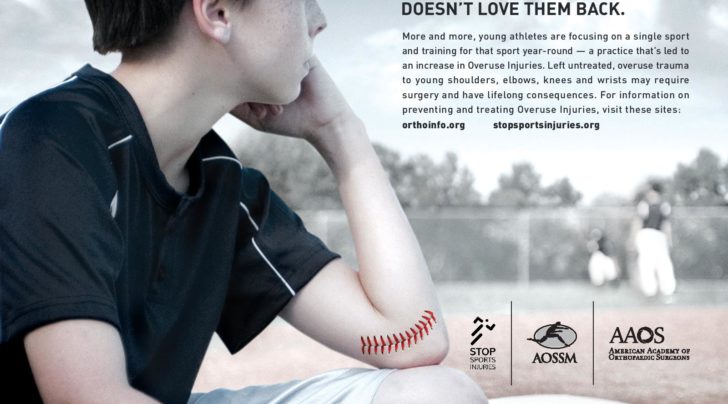
Spring will be here soon enough. As the weather warms and parents, coaches and our often ill-prepared children head out onto the baseball field there are some tips to keep in mind to minimize the risk of childhood shoulder and elbow injuries.
Pitching is NOT a very “safe” activity when it comes to children who are still growing. Shoulder problems are on the rise as parents and coaches have forgotten (or never learned) the basic tenets of protecting our children from common overuse injuries of the shoulder and the elbow due to pitching.
Childhood Elbow and Shoulder Injury Prevention: Obey Pitch Counts! 
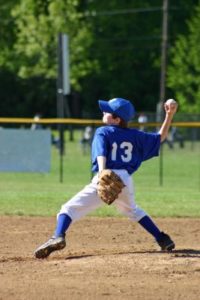
First… pediatric elbow and shoulder injuries can be very severe and can result in permanent, lifelong damage to your child’s arm!
Second… your child is likely not “the best on team” and “can not ” make it to the big leagues”! Remember, we’re talking about living the rest of their lives without debilitating shoulder and elbow pain. If your coach or doctor recommends resting a player… please abide by those instructions.
ANY YOUNG PITCHER WITH COMPLAINTS OF PAIN SHOULD IMMEDIATELY STOP PITCHING.
Third… When treating a pediatric or childhood shoulder or elbow throwing injury — Don’t let anyone tell you that shoulder surgery will return your little pitcher to perfect condition… it doesn’t happen in professional sports and it won’t happen to your child.
Fourth… Preventing pediatric shoulder and elbow pitching injuries starts with proper preparation. Late in the winter get your child off tossing a ball, and working on lower extremity strengthening and abdominal strengthening months before they plan on tossing from a mound. More than 75% of the torque or force needed to toss a ball comes from below their chest and requires strong, stable and able legs, pelvis, abdomen and lower back muscles.
Fifth… Obey the pitch count recommendations!! They are there for a reason and they are reasonably (not 100%) effective at preventing most childhood overuse shoulder and elbow pitching injuries. Many parents let their kids pitch with the team, hire a pitching coach, and practice with their children on their own. If your little one is throwing with full force, each and every toss counts towards to the pitch count.
Pitching Recommendations : Pediatric Shoulder and Elbow Injury Prevention Strategies:
Recommended limits for youth pitchers are as follows:
-
Recommended limits for 9-10 year old pitchers:
-
50 pitches per game
-
75 pitches per week
-
1000 pitches per season
-
2000 pitches per year
-
-
Recommended limits for 11-12 year old pitchers:
-
75 pitches per game
-
100 pitches per week
-
1000 pitches per season
-
3000 pitches per year
-
-
Recommended limits for 13-14 year old pitchers:
-
75 pitches per game
-
125 pitches per week
-
1000 pitches per season
-
3000 pitches per year
-
Feel free to download this Pitch Count Advisory to minimize the risk of a pitching related injury to your youngsters shoulder or elbow. Share it with other parents, coaches, etc… Pitching Recommendations_Pitch Counts








Good info…but I have a question:
These numbers are excellent, but they don’t say anything about all of the practice and warm up pitches. Is there a total limit we should be aware of?
Thanks
Michael… Warm up pitches do not count towards the total. However, if your little thrower is working with you, a pitching coach, etc… full strength tosses from the mound count towards the total number of pitches recommended. The younger the pitcher, the more strict you should be at enforcing or abiding by these numbers. The downside are potentially devastating over use injuries. As I tell many of my patients and their parents… there is no need for any child to only pitch prior to age 15-16. Prior to 15 they should learn *the game*, strategy, principles, etc. After their skeleton matures, and they decide they want to pitch, it is not difficult to bring them “up to speed” and learn the art of pitching.
Howard: One of the best online resources for these young throwers is http://www.safethrow.com, put together by one of my hand and arm surgeon colleagues, Dr. Charles Metzger.
THanks for the info Noel !!!
My son is a 11year old catcher. He LOVES baseball…but, for the first time, he feels a pain in his shoulder…top of his back. I know pitchers watch a pitch count, should I monitor his catching. I am worried about his shoulder’s health. I will take him to a pediatric orthopedic doctor tomorrow…what types of exam should I ask for to determine the health of his rotator cuff?
I hope everything went well at the doctors office. The rotator cuff is almost never the source of pain in an 11 year old.
I hope you got the answers you were looking for.
Howard Luks
Seeking advice on 14 yr old son (pitcher) that has unstable ocd lesion of capitellum. Surgeon has suggested debridement and microfracture procedure and has recommend that my son not pitch again. The leasion is on the smaller side just a few mm in size. If he desires to attempt pitching again should we consider a 2nd opinion possibly looking at an ‘oats’ procedure?
Any advice would be appreciated!
Thanks,
Bill
Hi Bill …
I would seek out a few different opinions … many OCD lesions will heal, while some will not. A few mm isn’t very large. In those cases it can be the edema or swelling in the bone that accompanies OCD that hurts. Sometimes it is a loose piece (detached on MRI) that bothers the elbow. Either way, arthroscopy is an option in only in a few rare circumstances, and the likelihood of returning to pitching after open elbow surgery is very low — so weighing the options of open surgery versus a fair chance at a normal life in another position on the field is something you and your surgeon should consider.
Good luck in your search for answers!
Howard Luks