Despite Evidence, Patients Want More Healthcare

Author: Howard J. Luks, MD- Posted in: Sports Medicine 15 Comments

The journal Health Affairs just surveyed more than 1,500 patients with employer-provided insurance, including dozens in focus groups and one-on-one interviews.

The “pervasive themes” from respondents, according to the authors, were “more is better, newer is better, you get what you pay for, (and) guidelines limit my doctor’s ability to provide me with the care I need and deserve.”


As I have stated over and over on this blog, true health care reform will encompass improving quality, increasing coverage and perhaps most important (to me) control health care costs. These issues are obviously not mutually exclusive. one can not be changed without controlling the others.   Many of the physicians I talk to feel that they have no incentive to control costs… they also feel that if they take the time, and make the effort to control costs via education,  that they will suffer financially.

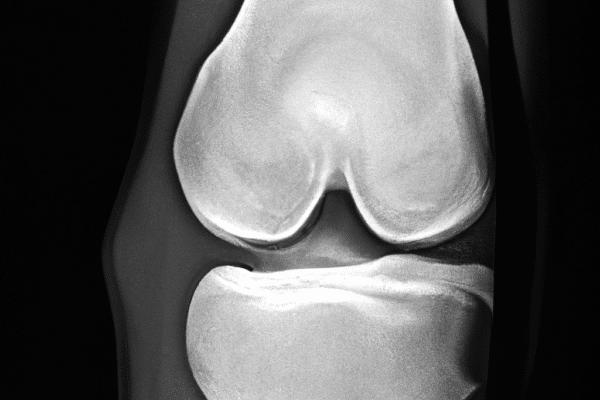
As most of you know I am an orthopedist. Nearly everyone of the patients I see in the office will request or even insist upon an MRI, CT or even an X-ray. Most of these tests are simply not necessary…. and may in fact be *harmful*.   I order FAR fewer MRIs than many of my colleagues…. Does that mean the care I offer is any less advanced. Absolutely not!! The literature has proven over and over that we do not need to X-ray every ankle injury, or every low back strain— it has also shown that a quality physical examination by a well trained sports medicine doc will frequently lead to a more accurate diagnosis than an MRI will.

MRIs are useful in many circumstances. They are very useful to confirm a clinical suspicion when diagnosis isn’t clear and surgery might be necessary. They are not needed to tell someone they have an ankle sprain, a rotator cuff strain, low back strain, etc. Is there a good chance the MRI will alter your chosen clinical pathway? If the answer is yes, then an MRI is indicated. Should I MRI your knee if you injured it yesterday and the likelihood of spontaneous resolution is high? Nope. What about someone with back pain after working in the garden all day… again, nope.  Most injuries are easy to diagnose by a history and physical exam alone—and most injuries follow a benign course to resolution

I need to spend quite a long time explaining to patients why an MRI isn’t necessary in their particular condition. Most will understand and go along with it. Some will not and will probably not be happy until they get their MRI (usually by another provider).

But this brings up an even more important topic. How many unnecessary MRIs are leading to unnecessary procedures?  Do you realize that a substantial number of “NORMAL”, assymptomatic individuals have meniscus (cartilage) tears in their knees, disc hernations in their neck and back, rotator cuff tears and labral tears in their shoulders? Now, suppose your mom or dad goes to the doc complaining of knee pain. Many docs will order an MRI. Based on their age they may have a high likelihood of having a tear (but most *degenerative* tears are not bothersome). So the MRI shows a tear and the patient is sent to an orthopedist who suggests surgery based on the MRI interpretation,  despite the fact that the patient has only had pain for a few days and despite the fact that they know many patients with degenerative tears will do very well without surgery. Some tears might require surgery, but that decision will based on much more than simply the MRI reading. So, many MRIs are leading to many unnecessary procedures further increasing the cost of care to the health care system. Physicians have an obligation to improve their patients understanding about a new technology and when the technology could be useful and when the technology might actually be harmful. We also have an obligation to utilize tests when clinically indicated and not simply because you do not want to have a 5 minute discussion with a patient. That time is well spent and can go a long way to diminishing the cost of health care delivery and improving a patients understanding of how the technology is useful.

Improving care, containing costs and educating patients is important to all of us… after all…

We are all patients !!!


This post is not meant as medical advice.  Whether or not imaging or other modalities are necessary to treat your condition is between you and your physician.


Don't miss an article. Signup to Dr. Luks' Orthopedic Newsletter

Tags: , ,

15 Responses to “Despite Evidence, Patients Want More Healthcare”

  1. ReplyAnonymous says:

    Very true. Patients come to the office with the following complaint: “I need an MRI”. Another example is a patient with low back pain of 1 week duration who, I found out later, went to another provider where he received an MRI and a lower extremity nerve conduction test. Both were negative. What a waste. I often tell my patient that I recommend an MRI only when surgical treatment is considered. That will deter them from insisting on getting an MRI.

  2. ReplyHoward Luks says:

    You must have had a few decent instructors :-)

  3. ReplyBryan Vartabedian says:

    More infuriating: Many children with any degree of abdominal pain (reflux, constipation) draw abdominal CTs in ERs. A disturbing trend and a sure sign that we’ve enabled technology to marginalize our role in patient care.

  4. ReplyHoward Luks says:

    Not too mention the long term effects of those scans on these poor kids. I just don’t buy the defensive medicine story. See the patient, examine the patient, document your findings (no scribe allowed!) and state why CT is NOT clinically indicated. Done! Very very very few jurors will ever have a problem with a caring doc who spend time with patient and came up with reasonable plan.

  5. ReplyHoward Luks says:

    NY Times piece on the treatment of “incidentalomas”. Unnecessary scans lead to unnecessary and occasionally complicated follow up tests and procedures. http://goo.gl/v41y

  6. ReplyHoward Luks says:

    Thanks for the comment Steve… the evidence is mounting. Over-utilization, over treatment, etc etc etc can be quite detrimental to our health. We ALL have a role in decrease such excesses. Patients and Providers alike.

  7. ReplyAnne Marie Cunningham says:

    My respect for you continues to grow. How do your colleagues feel when you have this conversation with them? How much do you feel costs of US healthcare is due to excess of supply? And did you see the Berwick paper on this in Health Affairs last year? I was ever so slightly cynical.

  8. ReplyAnonymous says:

    On the primary care side of the coin, I’m actually finding that the current economy seems to have been limiting the number of times that I have had patients want more testing. With more and more health care plans that I see these days with deductibles to be met or some that are even a flat 80/20 (patient is always responsible for 20% of outpatient care, that sort of thing), they’re having to shoulder more of the cost of testing that they might have otherwise wanted ten years ago when I started in private practice. But I do come across those patients that do want that imaging done. I explain to them my management approach and how imaging tests fit or don’t fit into my plan. I have found that most of my patients are agreeable to this approach if I explain it to them and I do caution then on the pitfalls of additional testing. Those that aren’t happy, to be honest, aren’t going to be happy with anything else I might do for them as their physician and they move onward.

  9. ReplyHoward Luks says:

    Anne Marie… very kind of you!! My colleagues do not read my blog ( I think only 3 people do) and I’ll skip 15 miles to work (#getupandmove) if any are on twitter! An enormous percentage of the costs associated with the US healthcare system is due to over testing, over treating, over prescribing, and the potentially unnecessary tests or surgeries triggered by the initial, (potentially) poorly indicated test. Docs will give many reasons why they order so many tests… but as I stated. Its easier to order test, brace, meds or whatever than it is to spend 5 min to explain why they aren’t necessary. All of course, IMHO. Medicine is a business… can u fault those who take full advantage of that? Perhaps. But there is a tremendous opportunity to control costs by controlling incentives… motivational economics (future blog post). Worst of all… so called Health Care Reform does nothing to address these issues…. at all :-(

  10. ReplyHoward Luks says:

    @burbdoc JP… you nailed my point…. if we are willing to spend a few minutes and explain why test isn’t indicated at this point in time, most patients will go along with your plan if it well articulated and understandable. As you noted, some won’t and will find a doc willing to order test… so be it In my area… I have not yet noticed a huge impact due to economy, yet. That time is coming soon….. thanks for ur comments

  11. ReplyDespite Evidence, Patients Want More Healthcare - Howard J. Luks, MD | Sports medicine and physiotherapy | Scoop.it says:

    [...] The journal Health Affairs just surveyed more than 1,500 patients with employer-provided insurance, including dozens in focus groups and one-on-one inter  [...]

  12. ReplyLonny Reisman, M.D. says:

    We were happy to see this post, and thank you for raising the issue. Our health care system will improve only when we can collectively increase quality and reduce costs. At Aetna, we have several programs in place to help by guiding patients and providers to make informed decisions based on clinical evidence. Also, we’re reforming payment to recognize value, not volume. But these programs alone won’t create a better system. In fact, they are often seen as barriers, serving as a challenge in the short-term. We firmly believe that we all have an obligation to ensure our health care system is effective, efficient and accessible. The alternative is to continue to rely on care that is not indicated by the medical evidence and can be harmful, and to let the health care system fail. That simply isn’t an option, and Aetna is all in on finding the right solutions. (Related: You can read more about our efforts—including putting medical evidence to work through HIT solutions like the CareEngine®—http://bit.ly/YXWn9O. We welcome your thoughts.)

    While not every practicing physician may agree with you now, the momentum created through discussions like this will help drive positive changes. Thank you again!

    Lonny Reisman, M.D.
    Chief Medical Officer
    Aetna

    • ReplyHoward J. Luks, MD says:

      Thank you Dr. Reisman! I’m sure that many forward thinking physicians and executives would agree with us. Our current system is on an unsustainable path. As we both know, change brings fear, and fear breeds animosity. But change also brings opportunity. There will be many bumps along the way, but those who recognize and embrace the changes occurring will hopefully be better prepared to continue serving their patients in a meaningful, objective (value based) manner.

      Once again, thank you very much for taking the time to add your voice to this post.

      Howard Luks MD

Leave a Reply

Comment Disclaimer

By reading this blog, you agree not to use this blog as medical advice to treat any medical condition in either yourself or others, including but not limited to patients that you are treating. Consult your own physician for any medical issues that you may be having. This entire disclaimer also applies to any guests or contributors to the blog. Under no circumstances shall this blog or any contributors to the blog be responsible for damages arising from use of the blog.

Furthermore, this blog should not be used in any legal capacity whatsoever, including but not limited to establishing “standard of care” in a legal sense or as a basis for expert witness testimony. No guarantee is given regarding the accuracy of any statements or opinions made on the blog.